Compare the axes before comparing price
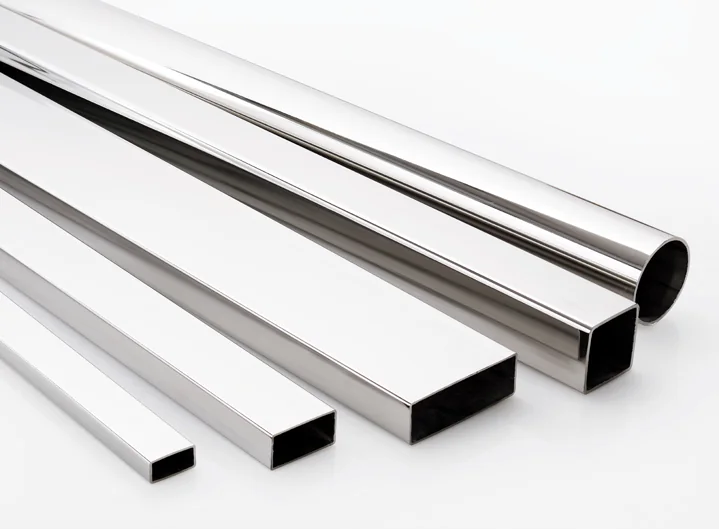
square vs rectangular stainless steel tube is fundamentally a geometry and orientation decision. A square hollow section has equal outside axes; a rectangular hollow section has unequal axes. That difference affects layout, mating faces, feature datums, visual proportions and the section properties used by an engineer. It does not make one shape universally stronger or better.
Use the decision matrix to identify the controlling project question. Values and calculations must come from the approved drawing and applicable design basis, not a YUHUA catalog. Archived YUHUA category mentions remain pending mandatory re-verification.
| Decision | Square tube | Rectangular tube | Approval needed |
|---|---|---|---|
| Axis symmetry | Equal outside axes | Unequal outside axes | Confirm installed orientation |
| Mating faces | Same nominal face width | Broad and narrow faces | Check inserts, cladding and joints |
| Feature datums | May use either equivalent face | Must identify broad/narrow face | Freeze drawing datum |
| Section properties | Equal only for ideal equal-axis geometry | Different about major/minor axes | Engineer checks Ix/Iy and design code |
| Appearance | Balanced visual grid | Directional proportion | Architect marks visible faces |
| Sourcing comparison | One size convention | Width-height orientation required | Quote same material and acceptance scope |

Use section-property formulas as a check, not a design
For an ideal sharp-corner rectangular hollow section, a preliminary second moment of area can be expressed as Ix = [B·H³ - (B-2t)·(H-2t)³] / 12 and Iy by swapping B and H. Real tube has corner radii and product tolerances, so engineering should use approved manufacturer data or the governing calculation method for final design.
When B equals H, the ideal expressions about the two centroidal axes are equal. When B and H differ, orientation matters. This explains why rotating a rectangular member changes the axis being used, even though the material and mass remain the same. Structural adequacy still requires code-based design, loads, connections and material properties.
Compare fit, fabrication and feature access
Square tube can simplify repeated frame nodes where equivalent faces are useful. Rectangular tube can provide a broad mounting face or fit a shallow envelope. Those are layout observations, not performance guarantees. Map welds, bolts, inserts, access holes and tool clearance on the actual section.
Bending and welding plans should identify orientation and visible faces. Ask the fabricator how corner geometry, seam location, heat input and distortion will be controlled. A shape substitution may require revised fixtures, cut programs and inspection datums even when the perimeter looks similar.

Compare appearance and finishing effort
A square grid and an elongated rectangle create different visual rhythms. Mark which faces remain exposed, the finish direction and where seam blending is acceptable. Rectangular broad faces may show waviness or handling marks differently from narrow faces; square members may make face-to-face finish matching more prominent at rotated joints.
Use a finish sample or objective acceptance method for critical work. Include film, separators and packing. Do not assume the same finish name produces the same visual result on different face widths or fabrication routes.
Make quotations geometrically comparable
State square or rectangular form, both outside axes, wall, length, material basis, condition, finish, product standard, tests, records and quantity. For rectangular items, show B and H orientation. Ask bidders to repeat every field and separate alternatives.
Compare usable pieces and fabrication scope, not only price per length or mass. A different section may change offcut, fixture, joint and finishing costs. Engineering approves geometry; procurement compares the resulting like-for-like commercial baseline.
Keep the comparison independent of YUHUA scope
An archived legacy source previously presented square and rectangular tube category names in YUHUA product information; that record is pending mandatory re-verification and cannot establish current product scope, availability or company capability.
This guide makes no statement that either profile, size, grade or standard is currently available from YUHUA. Any future inquiry must receive human-approved, item-specific re-verification before a product or company claim can be published.
Preserve the selected profile and axis basis
Once the project chooses square or rectangular tube, record why: axis symmetry, mounting face, envelope, section properties, joint detail, appearance or cut yield. Link the decision to the drawing and calculation revision. If the member is rotated, the load path changes or a broad face becomes visible, reopen the comparison rather than assuming the selected profile remains equivalent.
Control formula inputs separately from catalog labels. The ideal Ix/Iy expressions on this page explain orientation, but final design should use approved geometry, corner treatment, material properties, connections and the governing design method. Preserve the engineer's section-property source and ensure procurement does not accept a dimensional alternative on price alone.
Fabrication feedback belongs in the same profile record. Note fixture access, mitre behavior, welding distortion, insert fit and finishing effort for the actual section. If a fabricator proposes the other profile, request a revised drawing, property check, cut plan and visual-face review. That makes the alternative a controlled design change rather than a purchasing shortcut.
At closeout, keep the accepted profile, B/H convention, visible-face map, inspection method and deviations together. A later project can learn from that package, but it should not reuse the decision without confirming its own loads, fit and appearance priorities. This is the practical difference between a traceable comparison and a universal shape ranking.
Use a change-impact list when the profile switches after design development. Recheck member orientation, connection plates, fastener edge distances, insert fit, cut programs, weld access, finishing area, packing and drawing callouts. The new section may occupy a similar envelope yet alter several interfaces. Assign an owner to every affected document and close the changes before procurement accepts the alternative.
Compare commercial offers only after that engineering baseline is stable. Align material designation, outside axes, wall, length, corner basis, finish, fabrication, inspection and records. Where square and rectangular options use different cut yield or connection work, show those costs separately rather than hiding them in a price-per-length comparison. The decision record should make clear whether geometry, engineering performance, fabrication or appearance justified the selected profile.
Finally, verify that receiving can distinguish the approved choice without interpretation. Labels, item numbers and inspection sheets should identify the profile and orientation, while drawings show the controlling axes and faces. If a delivery uses an accepted alternative, retain its separate approval and do not merge the result into the original baseline. This closes the comparison at the physical item rather than at an abstract matrix.
Technical references
Questions buyers ask
Is rectangular tube always stronger than square tube?
No. Strength and stiffness depend on dimensions, wall, material, orientation, loading, connections and design rules. Compare approved section properties on the correct axes.
Why does rectangular orientation matter?
Its unequal axes affect datums, visible faces and section properties. Label B and H consistently throughout the project.
Can equal mass make two profiles interchangeable?
No. Fit, axes, local geometry, connections and fabrication may differ even when theoretical mass is similar.
Does YUHUA currently offer both profiles?
That cannot be stated from the withdrawn knowledge layer. Archived mentions are pending mandatory re-verification.