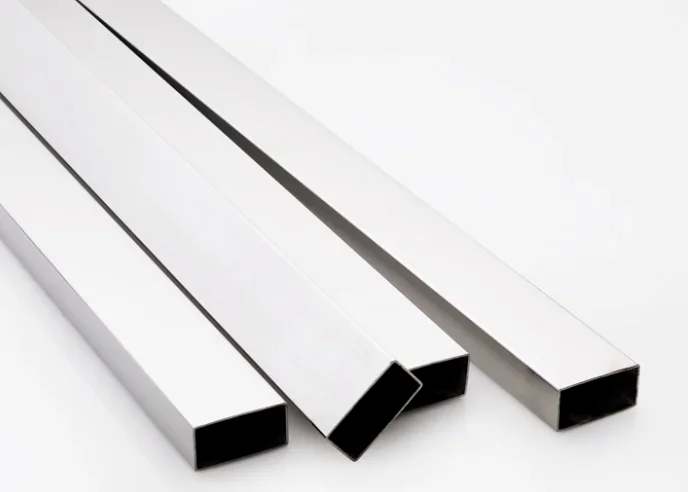
Use a transparent theoretical-weight calculation
A stainless steel rectangular tube weight chart should show its geometry, density input, units and limitations. For a preliminary sharp-corner model, cross-sectional area A = B·H - (B-2t)·(H-2t). Theoretical mass per metre in kg/m is A(mm²) × density(g/cm³) × 0.001. Real formed corners, dimensional tolerances and the actual alloy density create differences, so this is planning mathematics rather than an acceptance value.
The worked row below is deliberately hypothetical and is not a YUHUA size. It demonstrates the method with an assumed density input. Replace every input with project-approved values and retain the calculation revision.
| Illustrative input / step | Value | Result / note |
|---|---|---|
| Outside width B | 50 mm | Hypothetical only |
| Outside height H | 30 mm | Hypothetical only |
| Wall t | 2 mm | Sharp-corner simplification |
| Area | 50×30 - 46×26 | 304 mm² |
| Assumed density | 7.90 g/cm³ | Input to verify for selected material |
| Mass per metre | 304×7.90×0.001 | 2.402 kg/m theoretical |
| Six-metre piece | 2.402×6 | 14.41 kg theoretical, excluding packing |


Understand where the simple model differs from tube
Formed rectangular tube has corner radii, and the inner and outer corner geometry is not captured by the sharp-corner subtraction. Wall and outside dimensions also vary within the applicable product tolerance. For closer planning, use the governing geometry method or approved item data. Do not add false decimal precision to uncertain inputs.
Density varies with alloy composition and reference source. Record the chosen density and why it is suitable. Weight alone cannot prove grade. Material verification requires the approved designation, traceability and order-specific evidence.
Separate theoretical, commercial and shipping weights
Theoretical net mass helps estimate material, handling and freight. The quotation may use theoretical or actual weight as the invoicing basis. Gross shipping weight includes film, separators, bundles, supports and pallets. Keep those values in separate columns and make the commercial basis explicit.
For lifting or transport, use approved shipping documentation and safety controls, not this web example. Ask for bundle dimensions, bundle count and gross mass. Reconcile large differences before dispatch.
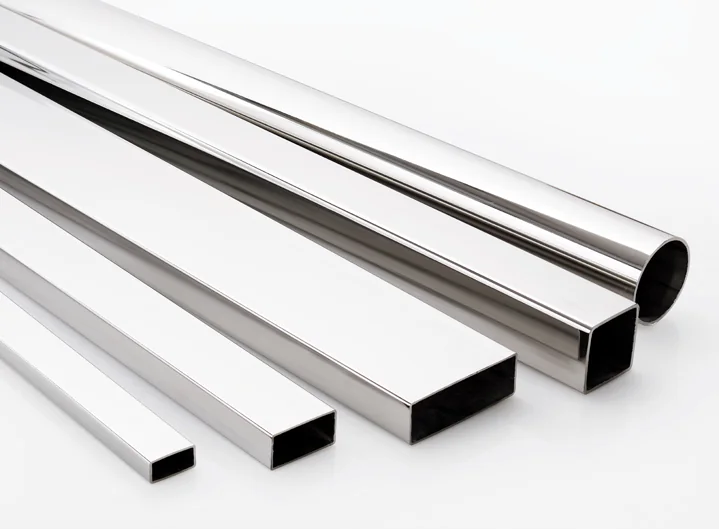

Add cut yield to the weight worksheet
Mass does not equal usable output. Include offered stock length, finished cut lengths, saw allowance, trim and expected remnants. Compare offers by usable pieces and net/gross logistics as well as price per kilogram. A heavier or longer bundle may still produce a better yield; the cut plan supplies the answer.
Surface rejection can also reduce usable quantity on visible projects. Link the weight sheet to finish, protection and inspection requirements so procurement does not optimize mass while ignoring cosmetic yield.
Audit units and formulas
Give every input a unit and prevent mixed-unit entry. Have a second reviewer recalculate one line independently. Check that wall is subtracted twice from both axes, density is converted consistently, piece length is not counted twice and quantity applies to the intended line.
Freeze the approved spreadsheet or calculation revision with the quote comparison. When dimensions, density or quantity change, issue a new revision rather than overwriting the original assumption. NIST SI guidance is a useful reference for unit discipline.
Do not turn a calculation into a company chart
An archived legacy source previously presented rectangular stainless tube as a category in YUHUA product information; that record is pending mandatory re-verification and cannot establish current product scope, availability or company capability.
The worked example is independent education and not a current size, density, mass, stock or quotation from YUHUA. Any future offered weight basis would need item-specific written evidence and human-approved re-verification.
Control calculator inputs and the commercial weight basis
Lock the geometry and density inputs before comparing theoretical weights. Store B, H, wall, length, quantity, density source, corner-model assumption and units in visible cells. A change to any input should create a new calculation revision. Do not overwrite the earlier result, because the difference may explain a quote or freight variance later.
Separate the theoretical model from the supplier's commercial basis. The sharp-corner formula is useful for planning, while invoicing may use actual or agreed theoretical mass and logistics use gross packed mass. Record all three in distinct columns with their owners. A price-per-kilogram comparison is invalid when suppliers use different weight conventions.
Reconcile the returned figures at item level. Large differences can come from corner geometry, wall tolerance, density assumption, length, quantity or packaging. Ask for the basis rather than forcing the result to match the calculator. If engineering accepts a revised dimension, update the cut plan and section-property review as well as the weight sheet.
After delivery, compare planned net mass, quoted commercial mass and shipping documents, then record the reason for material deviations. Keep the hypothetical web example separate from the project file. It demonstrates unit discipline only and must never be copied as a YUHUA dimension, density, product weight or quotation.
Add a formula audit before the worksheet becomes a commercial reference. Protect calculation cells, label each unit, show conversion factors and have a second person reproduce one line independently. Check that wall is deducted twice from both outside axes, density uses the documented unit basis and length or quantity is not applied twice. A plausible total is not evidence that the formula chain is correct.
Connect the calculator to cut planning rather than multiplying one mass-per-metre value across the order. Separate each B/H/wall combination, offered length, finished length, saw allowance and quantity. Where offcuts can be reused, state the assumption; where surface rejection is possible, keep it outside the theoretical geometry result. This makes the estimate useful for purchasing without pretending it is delivered mass.
At receiving, reconcile only like quantities. Compare net item mass with the agreed commercial basis and gross shipment mass with packing documents. Investigate differences by geometry, tolerance, length, density input or packaging rather than changing the worksheet to force agreement. Preserve the approved disposition so the next estimate can learn from an actual cause, not an unexplained correction factor. Retain the calculator revision, quote basis and shipping record under the same item identifier so technical and commercial reviewers can reproduce the variance and approve any resulting change to future planning assumptions.
Technical references
Questions buyers ask
What is the basic rectangular-tube weight formula?
For a sharp-corner preliminary model, calculate area as B·H - (B-2t)·(H-2t), then multiply by length and the documented density with consistent units.
Why may actual weight differ?
Real corner radii, dimensional tolerances, alloy density, length variation and measurement basis can all change the result.
Can weight verify the stainless grade?
No. Weight is not chemical identification. Use the specified material records and traceability evidence.
Is the worked row a YUHUA size or quote?
No. It is a hypothetical calculation example. Archived company scope is pending mandatory re-verification.